The Asian iGaming Market: Regulatory Patchwork and Operator Strategies

The Asian iGaming market represents both the largest growth opportunity and the most fragmented regulatory environment in the global gaming sector. By 2026, regional gross gaming revenue estimates place the Asian iGaming market ahead of Europe in total online gaming activity, yet the regulatory framework underlying that activity differs by an order of magnitude across jurisdictions just hundreds of kilometers apart.
In restricted markets such as Korea, where residents navigate a complex legal environment, local-language information platforms have become a primary reference point for players. Resources such as oncatv.com(oncatv.com) aggregate operator information and player feedback in Korean, illustrating how localized discovery channels fill the gap left by the absence of a fully regulated domestic market.
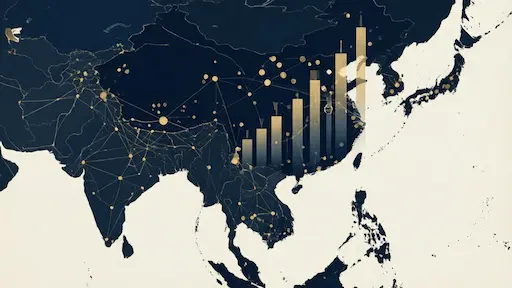
The Regulatory Spectrum in the Asian iGaming Market
Asian online gaming jurisdictions fall along a wide spectrum. The Philippines operates a structured offshore licensing regime that has historically supported substantial outbound operations into Greater Asia. Singapore maintains tightly controlled domestic licensing limited to two operators alongside strict prohibitions against unauthorized cross-border participation. Macau remains the regional anchor for land-based casino operations, with online activity by Macau-licensed operators tightly constrained by Mainland China policy considerations.
Japan has progressed cautiously through integrated resort legislation that addresses physical casino operations while leaving online gaming firmly outside the regulated framework. Korea maintains explicit prohibitions on resident participation in online gambling, with Kangwon Land as the sole domestically-licensed casino accessible to Korean nationals. Vietnam continues to refine its experimental approach allowing limited domestic participation under specific conditions while broadly restricting offshore operator access.
Thailand has actively debated regulatory frameworks throughout 2024 and 2025, with legislative proposals advancing through parliamentary review without final adoption as of early 2026. Indonesia maintains comprehensive prohibitions consistent with its broader regulatory environment. India presents the most fragmented internal landscape, with state-level regulatory variation that ranges from explicit prohibition to licensed online operations.
Operator Strategies in Restricted Markets
The structural mismatch between regulatory frameworks and observed player demand has produced a complex operator landscape across the Asian iGaming market. Offshore operators licensed in jurisdictions outside the Asian regulatory perimeter serve substantial player demographics across markets where domestic legal frameworks restrict participation. The commercial models supporting these operations have grown more sophisticated as enforcement intensity has varied across markets.
Payment infrastructure represents the most contested operational layer. Banking restrictions and payment processor compliance requirements have driven operators toward cryptocurrency settlement, alternative payment methods, and increasingly complex multi-layered processing arrangements. The compliance cost associated with maintaining payment continuity in restricted markets has risen substantially since 2023.
Customer acquisition channels have similarly evolved. Affiliate marketing networks that historically dominated player acquisition have faced platform restrictions across major search engines, social platforms, and mobile advertising networks. Operators have shifted spend toward direct partnerships with content publishers, influencer-driven channels, and increasingly toward community-based acquisition strategies that operate outside conventional advertising infrastructure.
The Localization Imperative
Successful operations in the Asian iGaming market require localization investment substantially beyond translation. Korean players expect particular game varieties, deposit and withdrawal patterns aligned with local banking norms, and customer service availability matched to local working hours. Japanese players, where reachable, expect platform aesthetics and game preferences distinct from Korean or Southeast Asian counterparts.
Game preferences vary substantially across markets. Live dealer baccarat dominates Greater China-adjacent markets including Singapore, Macau, and significant portions of Southeast Asia. Slot preferences align more closely with regional taste profiles than with global trends, with Asian-themed slot content from providers including Pragmatic Play, Habanero, and a growing roster of Asia-focused studios capturing disproportionate engagement in Asian markets.
Mobile-first platform design is non-negotiable. Asian player engagement on mobile devices substantially exceeds desktop activity across all major markets, with implications for game design, UI architecture, payment integration, and customer support infrastructure. Operators retrofitting Europe-first products for the Asian iGaming market typically observe substantially lower retention than operators that designed mobile-native experiences from inception.
Regulatory Trajectory
The regulatory trajectory across Asian markets points toward gradual formalization rather than sudden liberalization. Thailand’s legislative debate exemplifies the pattern: comprehensive proposals, extensive public consultation, regulatory framework development, and incremental policy progress measured in years rather than quarters. Operators evaluating long-horizon Asian iGaming market strategies generally plan around continued regulatory complexity rather than imminent harmonization.
Enforcement intensity has increased measurably across multiple markets. Korean authorities have expanded enforcement against domestic-facing payment infrastructure supporting offshore operators. Singapore continues to demonstrate willingness to prosecute cross-border participation through periodic enforcement actions. Mainland China policy implementation across Macau and adjacent jurisdictions has narrowed the operational space for online operations historically associated with land-based casino infrastructure.
The Operator Decision Framework
For operators evaluating Asian iGaming market entry or expansion in 2026, the strategic framework has become considerably more constrained than the open expansion thesis that characterized the previous decade. Successful operations now require explicit clarity on regulatory positioning, payment infrastructure resilience, localization investment scale, and ongoing compliance posture relative to source-jurisdiction regulatory requirements.
The most successful Asia-focused operators of the past three years have generally specialized rather than diversified. Operators concentrating on specific markets with deep localization investment have outperformed multi-market operators attempting regional aggregation. The economics favor focused excellence over geographic breadth, particularly as compliance costs and customer acquisition expenses have risen.
Looking ahead, the operators best positioned for the next phase of Asian iGaming market evolution combine substantial market-specific localization with operational infrastructure designed for regulatory complexity rather than regulatory simplicity. The Asian iGaming market is unlikely to become simpler in the foreseeable future, and the operators that internalize that complexity as a strategic capability rather than treating it as an obstacle are likely to capture disproportionate market share through the second half of the decade.